jueves, 9 de mayo de 2013

PREHISTORY AND ANTIQUITY (5º)

PREHISTORY AND ANTIQUITY

1) What does and archeologist do?
2) Do you know where can we find archeological sites in Spain?
3) What can you find in those archeological sites?
4) What time of History is found in those sites?

 
Answer these questions in your notebook from the textbook:
 
Prehistory is.................................................................


The Stone Age began..................................................

Paleolithic:

Neolithic:

Metal Ages began......................................................

Craftsmen and Artists.

PRE-ROMAN TIMES

The Peninsula was inhabited by Iberian  and Celtic tribes. Later, Phoenicians, Greeks and Carthaginians sailed across the Mediterranean sea to the peninsula, and established colonies.

IBERIANS AND CELTS

Iberians:

Celts:

COLONIES
Phoenicians:
Greeks:
Carthaginians:

ROMAN HISPANIA


TASK:

Answer and complete all of the above.


martes, 7 de mayo de 2013

The Visigoths in Hispania

Visigoths and Muslims

Formación de la Lengua Española

Arquitectura Visigoda: San Juan de Baños, Palencia


711 The muslims in the peninsula

En la noche del 27 de abril del año 711 las primeras tropas del valí Musa Ibn Nusayr, gobernador del norte de África, desembarcaban junto al peñón de Gibraltar con el caudillo militar bereber Tariq Ibn Ziyad al frente. A lo largo de toda la noche y hasta la mañana del 28 desembarcan hasta 7.000 hombres, que tras tomar con facilidad la ciudad de Cádiz se hacen fuertes en un radio que llega hasta Algeciras, recibiendo refuerzos de un nuevo contingente de 5.000 hombres enviado por Musa. De este suceso tomará su nombre el promontorio de Gibraltar: Yabal Tariq o Monte de Tariq.
Por aquel entonces reinaba entre los godos el que fue su último monarca, don Rodrigo, que se hallaba en Pamplona haciendo frente a un levantamiento de vascones. Don Rodrigo había llegado al poder legítimamente, tras ser escogido en asamblea tras la prematura muerte del rey Witiza. Sin embargo, su elección provocó fuertes divisiones entre los partidarios del anterior monarca, que había dejado tres hijos jóvenes en condiciones de perpetuar su linaje. Los partidarios de Witiza buscaron un aliado que pudiese ayudarles a recuperar el poder y lo encontraron en sus vecinos árabes, que controlaban todo el litoral africano y se hallaban en plena expansión. Medió en la traición don Julián, gobernador de Ceuta y antiguo cliente del rey Witiza, de quien cuentan que odiaba personalmente a don Rodrigo por haber seducido a su hija.
La batalla definitiva entre Tariq y don Rodrigo se produjo a orillas del río Guadalete. Las alas del ejército godo habían sido confiadas al clan Witiza, que en plena batalla huyó dejando a don Rodrigo desguarnecido por los flancos. Luchó el godo con coraje pero sólo encontró la muerte y la estrepitosa derrota de su ejército. Tras la derrota de Guadalete el reino visigodo cayó como un castillo de naipes. Toledo y Mérida se rindieron sin apenas resistencia y fue tan limpio el avance de Tariq que el propio gobernador Musa sintió envidia de sus victorias y cruzó el Estrecho al mando de 18.000 hombres. La invasión musulmana se había consumado. Sólo en las cuevas de Covadonga un antiguo partidario de don Rodrigo mantendría vivo el espíritu de la resistencia.

Click here to learn more about the muslims in the peninsula


THE RECONQUEST


La Reconquista española
¿Qué fue la Reconquista?
En el año 711 los musulmanes ocupan casi toda España. Sólo la región montañosa del Norte quedó en manos de los españoles. Desde allí los reinos cristianos se lanzaron a reconquistar su territorio. A partir del triunfo de Covadonga, en el año 722, se iniciará un lento pero persistente avance hacia el sur. Surgieron los reinos de Asturias, Leon, Navarra, Portugal, Castilla y Aragón. Finalmente, en 1492, en tiempos de los reyes católicos, la toma de Granada, último bastión musulmán, pondrá fin a la reconquista.
¿Cómo era la sociedad en los reinos cristianos durante la reconquista? El reparto de la tierra que se iba reconquistando benefició a la nobleza guerrera, que fue acumulando grandes posesiones que dedicarían sobre todo a la ganadería. Había musulmanes que permanecían en los territorios cristianos. Se los llamaba mudéjares y se dedicaban a la agricultura y a la pequeña industria. También era numerosa en estas zonas la comunidad judía que se dedicaba al comercio, los préstamos y al artesanado. Los musulmanes y los judíos eran tan numerosos en algunas zonas como los cristianos.
¿Quién fue el Cid Campeador? Fue un guerrero de la reconquista nacido en Burgos en 1030 llamado Rodrigo Díaz de Vivar, que luchó al servicio de los reyes Fernando I y Sancho II. Desterrado de Castilla en tiempos de Alfonso VI, guerreó por su cuenta contra los musulmanes y tomó la ciudad de Valencia en 1094. Murió allí en 1099. Su vida, símbolo del guerrero de la reconquista, inspiró el famoso poema del Mío Cid.
¿Qué eran las cortes?
A fines del siglo XII surgió una nueva institución: las cortes, una especie de parlamento presidido por el rey e integradas por la "Curia" (nobles y eclesiásticos) y los representantes de villas y ciudades. Votaban los impuestos, presidían la jura del monarca, planificaban las acciones militares contra los musulmanes y se ocupaban de los asuntos del reino. Las cortes significaron un avance democrático y una limitación al poder de los reyes.
¿Cómo era la situación en el siglo XV?
Dos grandes reinos cristianos estaban ya formados y asentados: Castilla y Aragón. En 1469, el casamiento de Fernando de Aragón e Isabel de Castilla logra unificar la península, aunque cada uno mantendrá el reinado sobre sus regiones de origen. Los "reyes católicos" incorporaron Navarra y culminaron la reconquista con la toma de Granada el 2 de enero de 1492, el mismo año del viaje de Colón.
¿Qué fue la Inquisición? Era un tribunal impuesto por Isabel y Fernando destinado a perseguir a los no católicos y lograr, por la fuerza, la unidad religiosa. El Gran Inquisidor Torquemada persiguió a herejes, musulmanes y judíos que se negaban a convertirse a la religión católica, aplicándoles graves tormentos que iban desde la tortura a la muerte en la hoguera. Finalmente, en 1492, los reyes católicos decretaron la expulsión de España de los judíos y los moros (musulmanes). Esto trajo graves consecuencias para el reino, que se vio privado de dos culturas muy ricas que se dedicaban a actividades económicas fundamentales.
¿Qué aportaron los musulmanes a la cultura española?
Los musulmanes permanecieron ocho siglos en España. Gracias a sus traducciones se difundieron grandes clásicos de la antigüedad y realizaron grandes aportes en el campo de la agricultura, la industria, las matemáticas, la física, la química y la medicina. Fueron ellos quienes introdujeron la guitarra en la península. El arte y la arquitectura islámicas pueden apreciarse en grandes obras de la región de Al -Andalus (Andalucía),como la Alhambra de Granada.


martes, 30 de abril de 2013

THE ATMOSPHERE AND POPULATION (5º)

TOPIC 7
Read and answer the questions:

VOLCANIC LANDSCAPES
A volcanic eruption is when magma rises through cracks in the Earth's surface. Eruptions can rapidly change the landscape for kilometres around.
During eruptions, red-hot material is ejected. This is called lava when it reaches the Earth's surface. Lava moves down, destroying everything in its path. It turns the ground into a dry, stony landscape where very little vegetation can grow.
The Canary Islands are a good example of volcanic landscapes. On the islands of Lanzarote and Hierro, we find volcanic cones. These are cone-shaped mountains craters called "calderas" on Tenerife and La Palma. Other volcanic formations on the Canary Islands are fields of lava called badlands. A good example is the Fire Mountains on the Island of Lanzarote.

1) Answer:
- What are badlands?
- How are the badlands formed?
- What are the "calderas"?
- Where can we find calderas?

2) Write down the name of each area on the Peninsula with volcanic formations.

3) Draw a representation of the water cycle.

4) Define:
- sunlight
- carbon dioxide
- ozone
- erosion
- transport
- sedimentation

5) True or False?
The main gases in the air are nitrogen and oxygen.
The atmosphere has large quantities of carbon dioxide, ozone and water vapor.
The atmosphere is not essential to life on Earth.
All living things breathe oxygen.
Plants need carbon dioxide for photosynthesis.
Oxygen filters harmul ultraviolet rays.

6) Put in the correct order:
a.- Water filters into the land, returns to the sea or evaporates.
b.- It becomes water vapor.
c.- Water falls from clouds as rain or snow.
d.- Water vapor rises and condenses into drops of water.
e.- The water cycle starts again.
f.- Liquid water evaporates because of heat from the sun.
g.- The water drops form clouds.

7) Fill the gaps.
- The geosphere is made up of ....................................layers.
- The crust is the Earth's ..............................layer.
- The mantle, or middle layer, is very............................
- The core is the Earh's ..........................layer.
- Magma is red-hot ..............................rock.

8) Finish the sentences
- Volcanoes form in places..................................
- Earthquakes are caused by.......................................
- Earthquakes on the ocean floor....................................................
- The action of wind and water....................................................
- Erosion is the removal of..........................................................
- Transport is the movement of ...................................................
- Sedimentation is the accumulation of........................................

TOPIC 10 POPULATION

1) Copy and learn:
"People like to live in places where there are good job opportunities, a healthy climate and good services. Many people live on the coasts. Some countries and regions are more densely populated than others. In Australia there are only 2 inhabitants per square kilometre".

2) Complete:
- The movement of population is called..........................
- Earthquakes are a natural cause of................................
- Finding work is............................................................
- Internal migration is....................................................
- International migration is............................................
- Emigrants are...............................................................
- Inmigrants are..............................................................

3) Explain the population characteristics of Spain. ( 1 paper sheet front).
4) Answer
- What are urban populations?
- What are rural populations?
- What measures the size of a population?
- What is a positive natural increase?
- What is a negative natural increase?
- Today the population os Spain is approximately ...........................million inhabitants.
- In 1960 it was about .............................million.
- There are now about.....................................million inmigrants.
- Population density is........................................inhabitants per square km.

5) Read and answer:
THE GROWTH OF CITIES
The first cities appeared between 6 and 7 thousand years ago in different parts of the world: the Middle East, India and China. They were small settlements. Most of the population was employed in fishing, agriculture or livestock farming.
 Today, cities have almost nothing in common with the first settlements. They are large urban areas with tall buildings, leisure facilities, and varied means of transport.
Two factors have influenced the growth of cities. One is the increase in population, thanks to medical advances and better health and food habits. The other is the opportunity they give people to work and the services they provide. This produces migration from rural areas.

a.- Find the most important words in each paragraph.
b.- Is there a relationship between the increase in population and the growth of cities?
c.- Do more people live today in villages or in cities? Why?

tHE mIDDLE aGES (6º)

links to study the middle ages

TASKS:

1)
- Identify the Germanic tribes which invaded the Iberian peninsula.
- How was the Visigothic kingdom formed and organized?
- Describe the Muslim invasion of the peninsula
- Explain the political organization of Al-Andalus. Social and cultural aspects.
- Identify the Christian kingdoms.
- Describe the Reconquest.
- Describe how the medieval society was established.

2)
- Enter the link above and write a paper about 5 facts which look interesting to you and will help you learn about the Middle Ages. Add pictures. You can create a pps presentation, write an essay...etc.

Tasks to be handed in by 9th May 2013.

TEST QUESTIONS PRACTICE (6º)

TOPIC 11:PREHISTORY

1) What is the Paleolithic period?
2) What does the word "paleolithic" mean?
3) When did the first hominids appear in the Iberian Peninsula?
4) Were they nomad or sedentary? How did they live?
5) What are the main differences between the Paleolithic and the Neolithic periods?
6) Say a few things about the Metal Ages.
7) What is the heritage of all these stages?
8) Who were the Iberians and the Celts?
9) Who were the Tartessians and where did they live? What did they do?
10) Describe Phoenicians/Greeks and Carthaginians.
11) How did the Romans invade the Peninsula?
12) The fall of the Roman rule.
13) Monuments and cities built by the Romans in Spain. Make a list of about 10.

TOPIC 10: EUROPE

True or False?
1) The Ural Mountains are near the Pyrenees.
2) The longest river in Europe is the Volga.
3) Most of the mountain chains are in the middle of Europe.
4) Sardinia is one of the largest islands in Europe.
5) The Atlantic Ocean is east of Europe.

Fill in the gaps
1) Europe is a ................................................continent.
2) The population density varies.......................................from one region to another.
3) There are .............................................................nations in Europe.
5) There ......................................a great diversity or languages.

Complete
1) A..........................is a group of countries united for a common purpose.
2) There are 490 million...................................................in the EU.
3) The official............................................in most countries in Europe is the Euro.
4) Member states share.................................on agriculture, industry and transport.
5) Most EU institutions are based in Brussels, Strasburg and...............................................


lunes, 8 de abril de 2013

TOPIC 11

TOPIC 11 (6º) PREHISTORY AND ANTIQUITY

LINKS ABOUT PREHISTORIC TIMES AND EVOLUTION OF MAN


PALEOLITHIC

PREHISTORIC ART

NATIONAL GEOGRAPHIC

WHAT IS PREHISTORY?

BBC page

DINOSAURS

PDF document


Reading: PREHISTORY.
What is the Stone Age
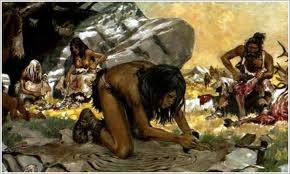
“Stone Age” is a term used to refer to prehistoric times, beginning when humans started to make tools and weapons that were made of stone. The Bronze Age and the Iron Age followed. The Stone Age is divided into Paleolithic, Mesolithic and Neolithic periods, marking the progressive levels of sophistication found in artifacts and cultural activities.
The Paleolithic Age stretches from about 2-2.5 million years BCE to 10,000 years BCE, which is 95 percent of the time humans and their direct ancestors have been on this planet. Food was obtained mostly by hunting, fishing and collecting wild plants, nuts and fruit.
Tools of the Stone Age.
There are no written records from the Stone Age. What we know about Stone Age humans comes from things they made, like weapons, tools, shelters and other objects discovered mostly in archaeological digs. Engraving designs on stones and bones, carved figures and drawings on the walls of caves also give us information and help us trace the slow development of Homo sapiens throughout the period.
The oldest known tools, from 2.6 to 2.5 million years ago come from Gona in Africa, where thousands of stone artifacts were found. The artifacts show that those who made them, most likely a human ancestor species, were very knowledgeable about stone fracture mechanics. Gona is near Ethiopia, where many other tools were found, although they were a bit younger, from 2.4-2.3 million years ago.
Groups of Homo erectus, an early species of humans found in China, Asia, Africa and Europe between 100,000 and 500,000 years ago, used stone tools, including hand axes, that were made by chipping at the stone to form an edge for cutting.
Many flint tools from the Middle Paleolithic Age, about 150,000 years BCE to about 40,000 year BCE, were found mainly in Europe, but also in North Africa, the Middle East and Siberia. This is the age of the Neanderthals, an early form of humans who lived about 40,000 to 100,000 years ago. Human ancestors during this age lived in caves, and many groups used fire. Needles made out of bone from that time were also found, evidence that they may have sewn animal skins for clothing and other protection.
Where did the People of the Stone Age Live.
Shelters made by Neanderthals showed that they also lived in huts made of wood and had hearths for fire, Another hut made of animal hides over wooden poles was found inside of cave in Grotte du Lazaret in France. Other huts, sometimes with divided living spaces and hearths and braced with mammoth bones have been found in France, the Ukraine, Siberia and Russia
What Did Stone Age People Eat?
During the Stone Age, people were primarily hunter-gatherers. They depended for food on those items that were readily available and were in their close proximity. This included animals and the various plants that grew in the area. This type of existence, of necessity, defined the ability of ancient people to interact with their environment.
Lacking the ability to cultivate their own food, either plant or animal, Stone Age people were forced to live on what the surroundings provided. This type of subsistence life style meant that people were unable to stay in one specific location for any length of time. A number of factors would force them to move and seek new sources of food. By way of example, the available edible plants or the animal life in any specific area would be depleted. Other factors influencing the need to relocate continuously included other, stronger tribes competing for the same area, the lack of adequate drinking water or, following the discovery of fire, the lack of fire-burning materials.
This nomadic existence also meant that Stone Age society was one without any form of permanent settlement. Therefore, people took shelter either in caves or in primitive shelters easily constructed from material gathered around them. Additionally, people were forced to carry all of their possessions with them. This was a significant burden that prevented the development of a more advanced community. The amount of time needed to find and acquire food was another barrier to mankind’s development as most of the day was spent gathering food and seeking places for shelter.
Agriculture was unknown to Stone Age people. Many of what are today considered basic foodstuffs were thus unavailable to them. For example, there would have been no grain products. These would have required people’s remaining in one place where wheat, barley, rice and so forth could ripen. The Stone Age diet would have consisted primarily of meat and fish, fruits, vegetables, roots and nuts.
Artifacts from the Upper Paleolithic Age
Artifacts from the Upper Paleolithic Age, 40,000 BCE to 10,000 BCE, belonging to Cro-Magnons, now called early modern humans, were found in Europe. This is also the period of the famous “Venus of Willendorf,” dated between 24,000 BCE and 22,000 BCE. This 11-centimeter high carving of a female figure made of oolitic limestone was discovered in a village in lower Austria. It is the first of several such small carvings of females found in an area from France to Siberia that have essentially the same characteristics: very large abdomens and pendulous breasts, no features on the face and very tiny or missing feet. Thought by some to be fertility figures, these findings, along with very few findings of male figures, have led to much speculation about the role of women in Paleolithic communities and the possibility of matriarchal societies.
Mesolithic Age.
During the Mesolithic Age, beginning more than 10,000 years ago, humans domesticated plants and animals and settled in communities, frequently along shorelines. Stone tools became smaller and more refined, and the bow and pottery began to appear.

The Mesolithic Age overlapped with the Neolithic age. The latter saw the development of pottery and weaving and ended with the appearance of metal tools and weapons which helped with hunting. The rate of development varied in different geographic regions but overall man was evolving.

TASK:
1)      Write 5 facts about Prehistory that you like.
2)      Click on one of the links provided and write a report/article about the content and what you learned.
3)      Present your research with pictures or drawings of your discoveries.
4)      Write a summary of the text “Prehistory” above.

THE ROMAN HISPANIA


Hispania is one of the names given the area that is the modern Spain and Portugal. It is also known as the Iberian Peninsula, a name said to come from the Ebro (Iberus) river. Early settlers included Celts and Africans. Phoenicians may have colonized areas of the peninsula in 1100 B.C. Here are more resources on Hispania from the point at which it came to the attention of Republican Rome.
The name Hispania refers to the Iberian peninsula where modern Spain and Portugal are located. It is bordered by the Mediterranean Sea, the Atlantic Ocean, and the Pyrenees. Six mountain ranges separate five large valleys with major rivers, Durius (Donro), Tagus (Tajo), Anas (Guadiana), Baetis (Guadalquivir), and the Iberus (Ebro).
After its defeat by the Romans in the First Punic War (264-41 B.C.), Carthage compensated for its loss of Sicily by rebuilding a commercial empire in Spain. The country became the staging ground for Hannibal's epic invasion of Italy during the Second Punic War (218-201 B.C.). Roman armies also invaded Spain and used it as a training ground for officers and as a proving ground for tactics during campaigns against the Carthaginians and the Iberians. Iberian resistance was fierce and prolonged, however, and it was not until 19 B.C. that the Roman emperor Augustus (r. 27 B.C.-A.D. 14) was able to complete the conquest of Spain.
Romanization of the Iberians proceeded quickly after their conquest. Called Hispania by the Romans, Spain was not one political entity but was divided into three separately governed provinces (nine provinces by the fourth century A.D.). More important, Spain was for more than 400 years part of a cosmopolitan world empire bound together by law, language, and the Roman road.
Iberian tribal leaders and urban oligarchs were admitted into the Roman aristocratic class, and they participated in governing Spain and the empire. The latifundios (sing., latifundio), large estates controlled by the aristocracy, were superimposed on the existing Iberian landholding system.
The Romans improved existing cities, established Zaragoza, Merida, and Valencia, and provided amenities throughout the empire. Spain's economy expanded under Roman tutelage. Spain, along with North Africa, served as a granary for the Roman market, and its harbors exported gold, wool, olive oil, and wine. Agricultural production increased with the introduction of irrigation projects, some of which remain in use. The HispanoRomans --the romanized Iberians and the Iberian-born descendants of Roman soldiers and colonists--had all achieved the status of full Roman citizenship by the end of the first century A.D. The emperors Trajan (r. 98-117), Hadrian (r. 117-38), and Marcus Aurelius (r. 161-80) were born in Spain.
HADRIAN
Official Title: Imperator Caesar Traianus Hadrianus Augustus
Name Known by: Hadrianus Augustus. Wife: Trajan's grand-niece Vibia Sabina
Dates: January 24, 76 - July 10, 138
Place of Birth: Italica, in Hispania Baetica, or Rome
Answer these questions:
1) What was Hispania?
2) Where does the name of Hispania come from?
3) How did the romanization of Hispania happen?
4) What emperors were from Hispania?
5) Who was Hadrian?
Reccomended reading:

Task: Find monuments built by the Romans in Spain and important towns from that time.